Home compostable
Areca Leaf. From Palm to Table
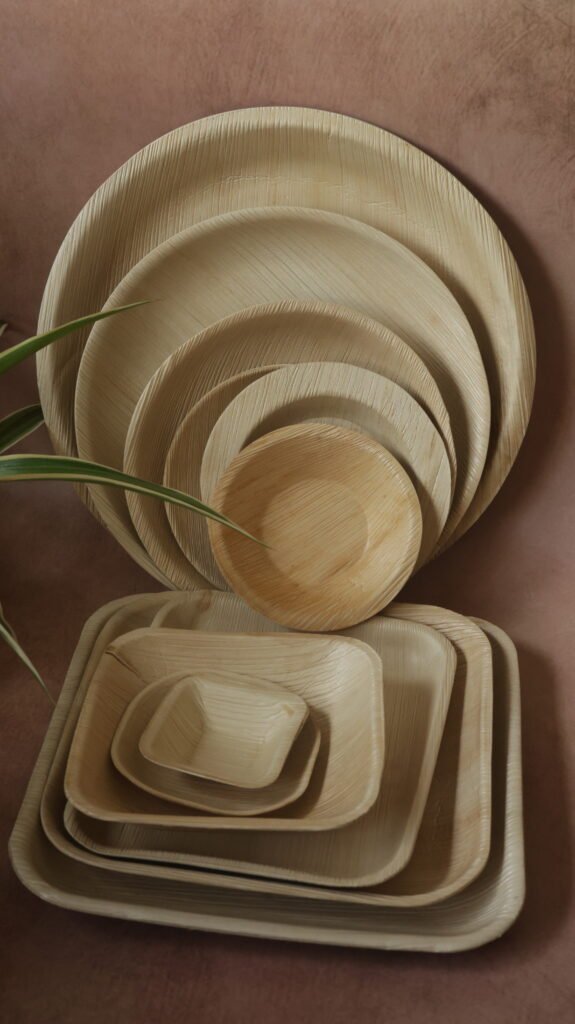
Areca palm leaves fall naturally once a season. The leaves are then cleaned and heat-pressed into plates, bowls and trays, with no chemicals, dyes or bleach added. They look & feel premium and have their own DNA, no two tableware will ever have the same texture.
- Made from
- Areca Palm Leaf
- Breaks down
- 8-12 Weeks
- When heated
- Food-Contact Safe
What it is
From Palm to Table
The areca palm sheds its leaves on its own as part of normal growth . Cleaning, collecting and pressing what already falls is the entire process.
- Fallen leaves Collected & washed after they drop the areca palm.
- Cleaned & heat-pressed Washed, then moulded under heat — no added chemicals or dyes.
- Premium Texture Each piece keeps the leaf's own grain and colour, no 2 plates will ever be the same.
- Soil Returns to soil completely — no microplastics, no residue.
Why it’s better
Nature meets Functionality
- No harsh linings/toxins No plastic lining, no chemical bleach, no dye — just cleaned and pressed leaf.
- Stiff & Sturdy The leaf's own structure is so sturdy, it will not give up half-way through the meal, even with oily gravies..
- Heat Friendly It is microwave safe & re-heatable, without any deformation.
- Naturally Unique Grain, colour and pattern vary leaf to leaf — no two plates are identical.
Areca Leaf vs. what’s sold as “eco”.
A lot of packaging is sold as green. Here is what each option is actually made of, and what happens to it after the meal.
| Ours Areca Leaf | BaselinePlastic | Sold as ecoPlastic-lined paper | Sold as ecoPlastic-coated paper | |
|---|---|---|---|---|
| Made from | Areca palm leaf | Oil or natural gas | Paper with a thin plastic film inside | Paper or board with a plastic coat |
| Plastic in it | None | All of it | A film on the side that touches food | A coat on the surface |
| Hot, oily food | Yes | Holds, but can soften and release chemicals when hot | Holds, but the plastic film touches your food | Holds, but the coat touches your food |
| Microwave | Yes | Only some types | Varies, check the pack | Varies, check the pack |
| Breaks down | About 2 months | Doesn’t. Lasts centuries, as microplastics | The paper does; the film stays | The paper does; the coat stays |
| The real difference | Areca palm leaf, pressed and shaped | Here for centuries after one meal | Plastic hidden inside paper | A plastic coat, sold as paper |
- Made from
- Areca Leaf: Areca palm leaf
- Plastic: Oil or natural gas
- Plastic-lined paper: Paper with a thin plastic film inside
- Plastic-coated paper: Paper or board with a plastic coat
- Plastic in it
- Areca Leaf: None
- Plastic: All of it
- Plastic-lined paper: A film on the side that touches food
- Plastic-coated paper: A coat on the surface
- Hot, oily food
- Areca Leaf: Yes
- Plastic: Holds, but can soften and release chemicals when hot
- Plastic-lined paper: Holds, but the plastic film touches your food
- Plastic-coated paper: Holds, but the coat touches your food
- Microwave
- Areca Leaf: Yes
- Plastic: Only some types
- Plastic-lined paper: Varies, check the pack
- Plastic-coated paper: Varies, check the pack
- Breaks down
- Areca Leaf: About 2 months
- Plastic: Doesn’t. Lasts centuries, as microplastics
- Plastic-lined paper: The paper does; the film stays
- Plastic-coated paper: The paper does; the coat stays
- The real difference
- Areca Leaf: Areca palm leaf, pressed and shaped
- Plastic: Here for centuries after one meal
- Plastic-lined paper: Plastic hidden inside paper
- Plastic-coated paper: A plastic coat, sold as paper
After use
What happens after the meal.
Animation: over 180 days in compost, Areca Leaf breaks down (in about 2 months) and a plant grows from the soil. The plastic next to it is unchanged.
- Empty & Clean Scrape off leftover food and separate any non-compostable items.
- Compost Put it in the home compost or the wet-waste bin.
- Let Earth do the work Allow nature and the composting process to do their work, turning organic material into a soil-enriching resource.
Areca Leaf, answered.
Each plate is pressed from a real, individual palm leaf, so small differences in colour, grain and pattern are normal — not a defect. It’s what tells you it’s leaf, not a printed plastic look-alike.
Our packaging is compostable, although the type and conditions vary by the product. Some are suitable for home composting, while others required industrial composting. We focus on practical, accessible alternatives to conventional plastic – choosing better materials today, while continuing to push for better options.
MOQs don’t have to be intimidating. Whilst they vary by product, we’ll do our best to find an option that works for your business. And if you’d like to commit to a larger quantity, we can hold agreed stock for you and release it as you need it — giving you the benefits of bulk buying without the storage headache.
It depends on the item and on custom printing. We’ll share exact quantities for your range during the consultation.
Other materials
Every material we use, and why.
- Plates, bowls & containers Bagasse Sugarcane fibre left after juicing, pressed with heat. Holds hot, oily food without a plastic lining. Learn more
- Cups & Drinkware After Brew Edition Waste from coffee beans, once extracted, that have so much potential. Learn more
- Containers & Cups Aqua Edition Paper cups & containers with a water-based coating instead of the usual plastic lining. Learn more
- Straws CocoCraft Edition Dried coconut leaf, naturally water-resistant. Made by hand from leaves that would otherwise be burned or discarded. Learn more
- Cutlery Wood & Bamboo Responsibly sourced birch wood and bamboo. No plastic coating. Learn more
- Clear cups, lids & containers Polylactic Acid (PLA) Plant-based plastic made from corn or sugarcane starch. It is often used as it is flexible and clear like plastic. Learn more
Ready to switch to Areca Leaf?
Book a free 15-minute consultation. We’ll recommend the right range, price and delivery schedule for your menu. No commitment.
